
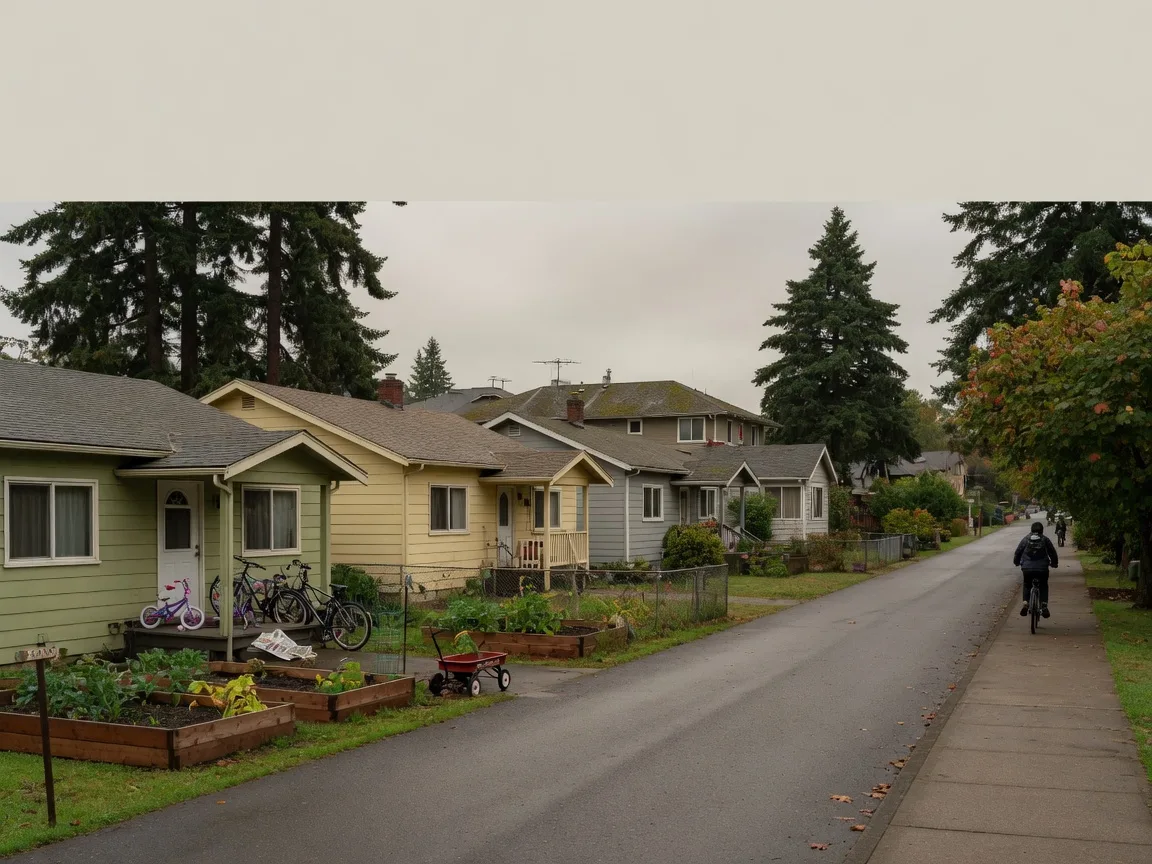
Buying a home as a homeschool family is not the same search as buying a home for a school-zone family. The school zone barely matters. Everything else does.
Where the co-op meets. How far the library is. Whether the internet is real. Which roads are quiet enough to walk. Whether the neighbors will be around on a Tuesday morning, and whether they will get it.
I am a homeschool mom first and a broker second. We live on 7-plus acres near Springfield with our two boys, and I have walked enough Lane County neighborhoods with other homeschool families to know what makes the week work. This is the list I actually use.
"The real question is not whether the neighborhood feeds a good school. It is whether the neighborhood can carry your school week."
Start with the Week, Not the House
Before you compare floor plans, write down your week. Monday co-op. Wednesday enrichment. Thursday library. Park day Friday, weather willing.
Now measure houses against that week, not against square footage. The drive to co-op is a twice-a-week reality. The library is a campus. A quiet road is a classroom wall. Those matter more than an extra bedroom you will use twice a year.
When we look at properties together, we map your actual week onto the map. That changes which listings even make the list.
Co-op and Community Proximity
Homeschooling is relationship-driven, and most of those relationships live in co-ops and groups. Lane County has a genuinely active scene, and much of it organizes around geography.
Round Table Homeschool Collective serves the Eugene-Springfield area with two class sessions a year plus park days, hikes, and teen events. Cascadia Learning Cooperative is a secular, choice-based co-op that meets three days a week in Eugene. New Hope West runs faith-based co-ops for elementary and middle-and-high-school ages on Wednesdays. The Springfield Area Homeschool Co-op has been running since 2006.
The point is not that you should join any specific one. The point is that these groups sit in specific places, and you will drive to them weekly. Proximity is a lifestyle decision, not a nice-to-have.
The Library Is a Campus
For a homeschool family, the public library is the de facto campus: story times, reading programs, study space, meeting rooms, and the bulletin board where every local group posts.
Eugene Public Library has three branches: Downtown on West 10th, Bethel on Echo Hollow Road, and Sheldon in the northeast. Springfield Public Library sits inside City Hall at 5th and G, and its virtual branch, wheremindsgrow.org, keeps the catalog and digital resources available around the clock.
When we look at neighborhoods, I ask how far the closest branch is and what it offers in person. A ten-minute library run you will actually make beats a beautiful branch you never reach.
Internet Is Infrastructure
Online curriculum, research, co-op classes on Zoom, a parent working from home: none of it works on a promise. Connectivity is infrastructure for a homeschool household.
In Lane County, the FCC's definition of broadband is about 100 Mbps download, and roughly 91 percent of county households have access at that level. The gaps are concentrated in rural pockets, which is exactly where a lot of acreage listings sit. Lane County and the Lane Council of Governments have been closing those gaps, including an $8.5 million Rural Reach fiber project expected to bring service to roughly 1,900 to 2,000 rural households by the end of 2026.
The takeaway: check the actual address, not the area. I have stood on beautiful rural lots where the listing looked perfect and the connectivity made online school a daily struggle. Verify before you fall in love.
Quiet Roads and Safe Routes
Your school week includes recess everywhere. Kids walk, bike, run, and collect bugs between lessons, and they do it on the roads and trails around the house.
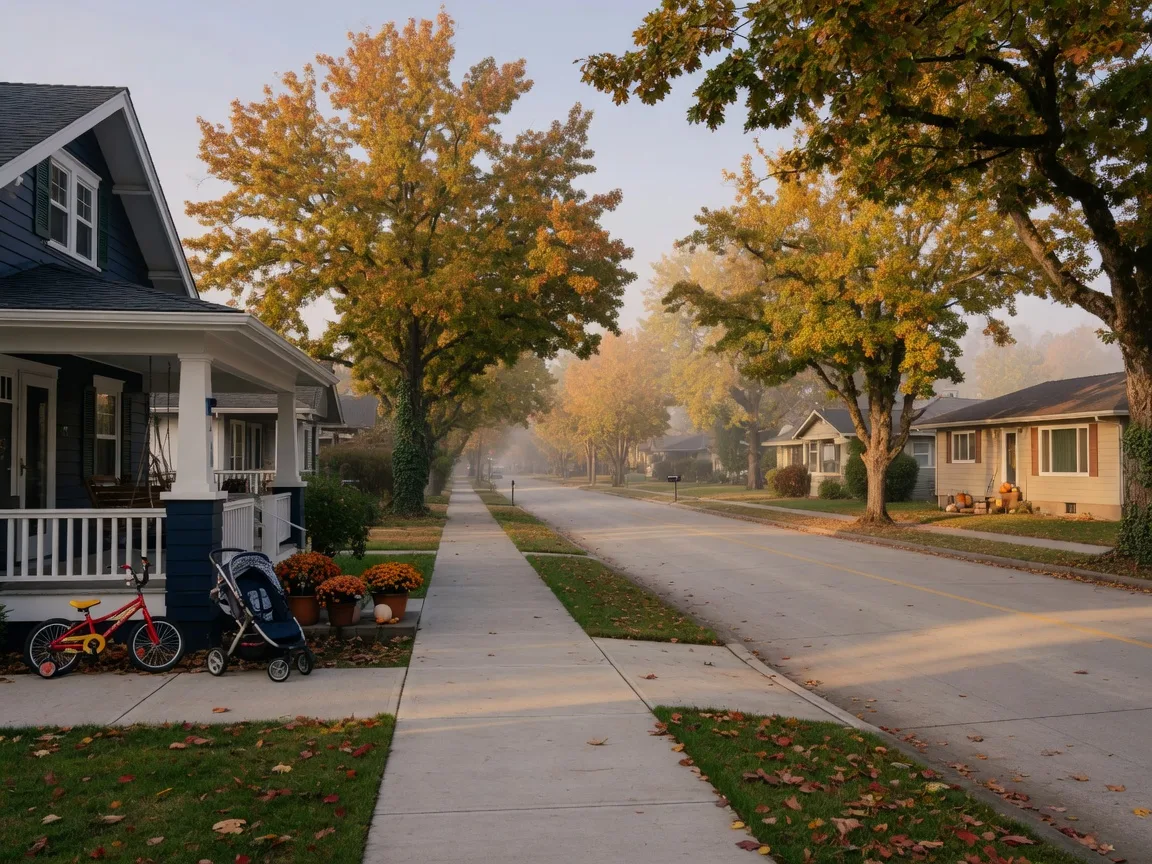
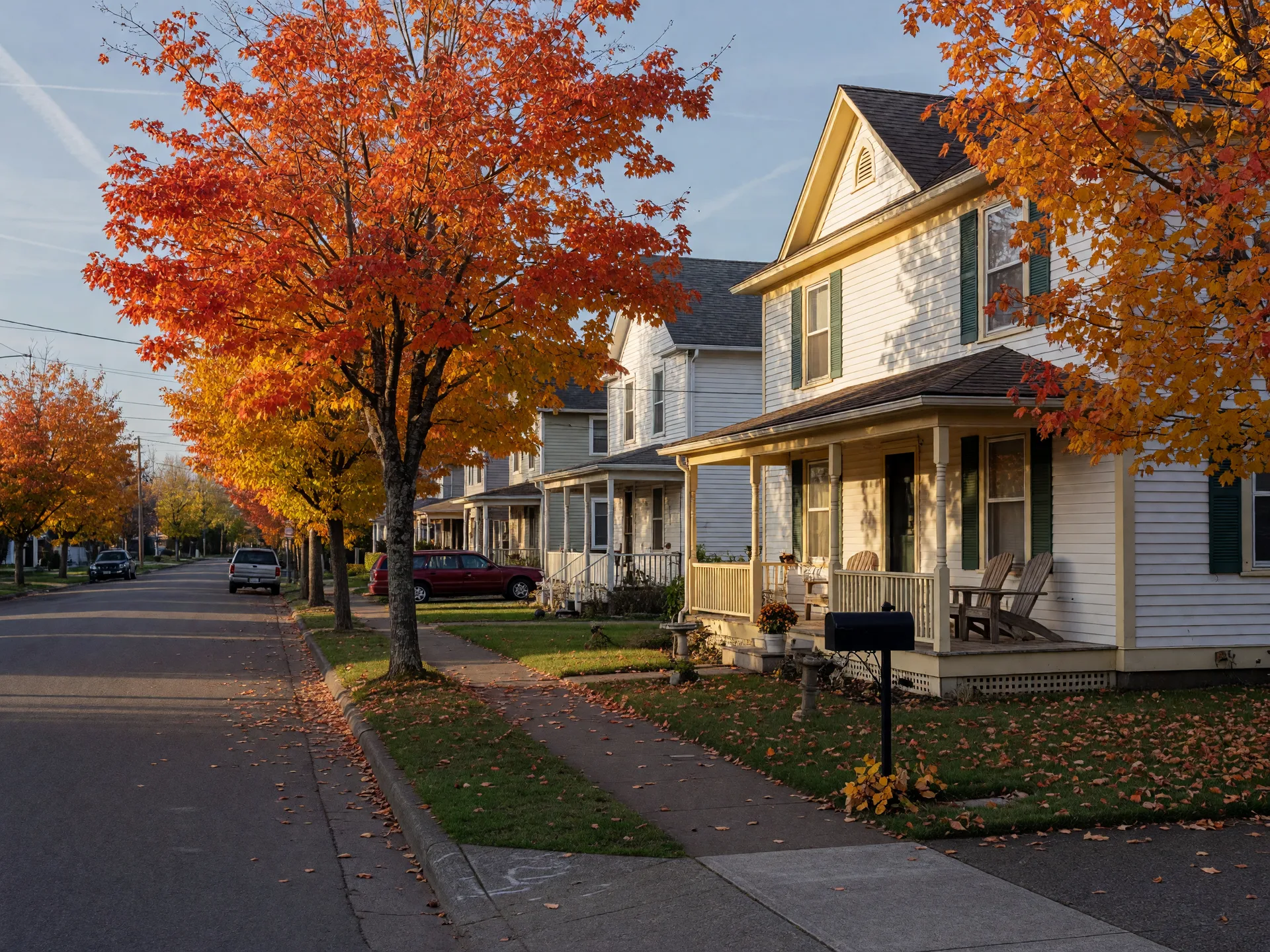
Look at what the walk out the front door looks like at 10 a.m. on a school day. Is the road quiet? Is there a shoulder or a sidewalk? Can a kid ride to the library or the park without crossing a busy arterial?
The families I work with consistently trade a little convenience for a lot of calm. A dead-end street, a low-traffic lane, or a home near the McKenzie River bike path is worth more than an extra closet.
Neighbors Who Get the Rhythm
The social question homeschool families ask me more than any other is: will my kids have friends here? The honest answer is usually about the neighbors.
Look for a neighborhood with kids around, and for neighbors who will actually be present mid-morning: other homeschool families, remote workers, retirees who love kids. Those are the people who become the math buddy, the barn helper, and the person who says hello instead of asking why your kids are not in school.
You can read a fair amount of this from the street. Kids' bikes in driveways. Gardens. A neighbor who waves. If a street has no kids and no front-porch life, that is information.
Room to Live the Life
Homeschooling collects stuff: books, science projects, a kitchen that feeds a co-op lunch rotation, and usually some animals.
I tell buyers to look for the unsung spaces. A room that can hold a school day without being the dining room. A mudroom for wet boots. Outbuildings or a big-enough lot if chickens or goats are in the plan. And before you count on animals, check the zoning for the exact parcel, because city limits and county zones draw very different lines on livestock.
You do not need a farm to homeschool. But you do need a house that will not fight your life.
The Checklist Before You Buy
- Map your weekly rhythm and measure the house against the drives, not just the rooms
- Check drive time to the co-ops and groups you would actually join
- Tour the closest library branch and see what it offers in person
- Verify internet at the exact address, not the area, especially on rural parcels
- Walk the road on a weekday morning and judge the traffic for kids
- Look for neighbors who are home mid-morning and for kids on the street
- Pull the zoning before you plan for chickens, goats, or a garden
If Acreage Is in the Plan
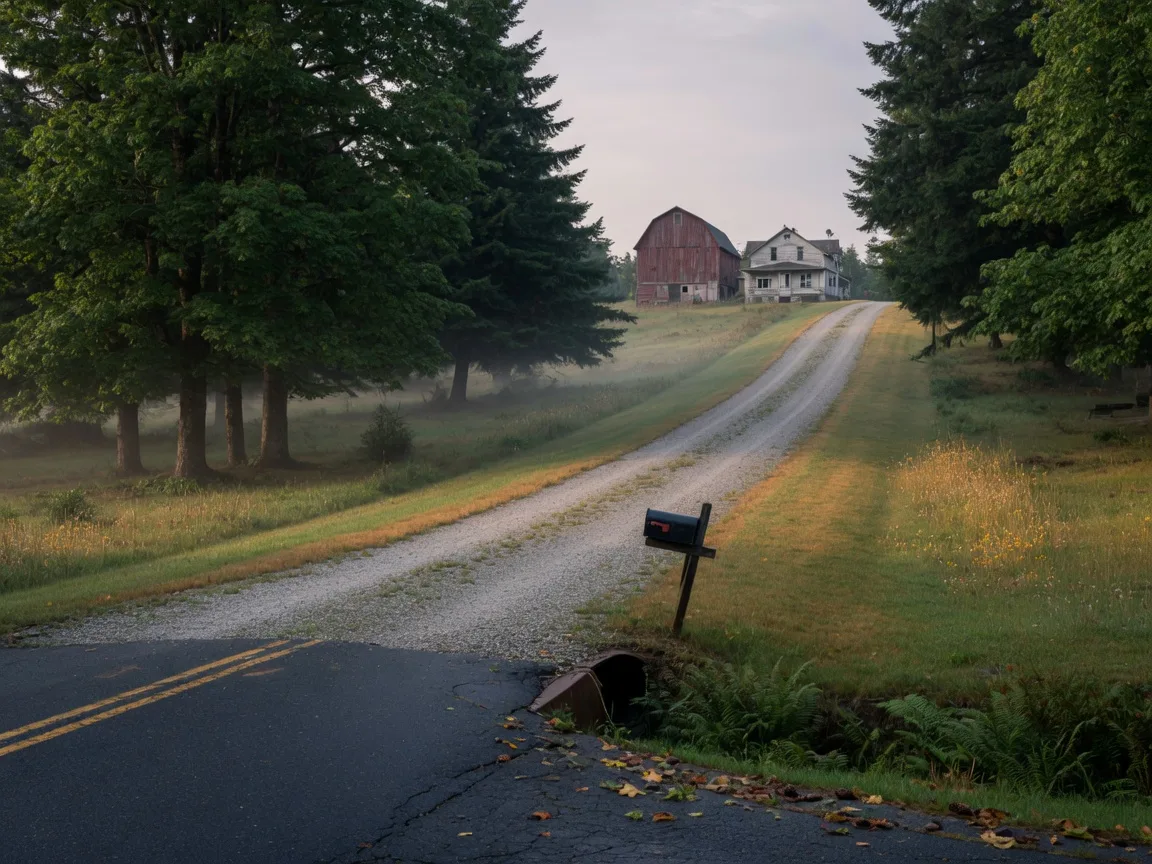
A lot of homeschool families land on the same search I made: more land, more quiet, more room for animals and gardens. That is a wonderful life. It also adds due diligence: wells, septic, zoning, and access all need to be checked before you make an offer, not after.
The free acreage buyer checklist I built for Lane County families walks through every one of those questions, in the order you should ask them.
Your Next Step
The best homeschool neighborhoods in Lane County are not on any ranking list. They are the ones where the week works: close to the co-op, near a real library, wired for school, and calm enough to think.
I know which pockets those are, and I have built the search around homeschool families. If you want to talk through your family's week and which areas fit it, book a free 30-minute call. No pressure, no pitch, just clarity on where to start looking.