
Septic systems are the least glamorous part of buying acreage, and the most expensive to ignore.
If you are shopping in Linn or Douglas County, you are probably going to buy a home with one. Most acreage parcels sit well beyond any city sewer line, and where there is no sewer, there is a septic system.
Here is what I want you to understand before you write an offer: how these systems work, what actually fails, what a real inspection covers, and what it costs to keep one healthy. This is the conversation I have with buyers on every rural property I show.
None of this is meant to scare you off. It is meant to make sure the system is never a surprise you discover after closing.
"Some things about a house you can see on a tour. A septic system is not one of them."
Start with the Right Question
Most buyers ask, "Is the septic system good?" That is the wrong question.
The right question is, "What do I need to know about this one?" Every system has a history, and the history tells you more than the age.
The real question is what the records show, and whether the system has been treated like a tool that needs care, or ignored until it fails.
Who Regulates Septic Systems in Linn and Douglas County
Oregon's Department of Environmental Quality writes the rules for onsite wastewater systems under Oregon Administrative Rules 340-071 and 340-073. But in Linn and Douglas County you do not deal with DEQ directly. The county acts as DEQ's agent.
That matters, because the county is where the records live.
- In Linn County, the regulator is Linn County Environmental Health, part of Linn County Health Services. Since September 2023, septic applications and permits are processed through Oregon's ePermitting portal.
- In Douglas County, it is the Planning Department's Onsite Services office, which issues permits and keeps the system records.
- Permits have been required for septic systems in Oregon since 1972. If a home predates that, the system may never have been permitted, or it may have been replaced since.
How a Septic System Actually Works
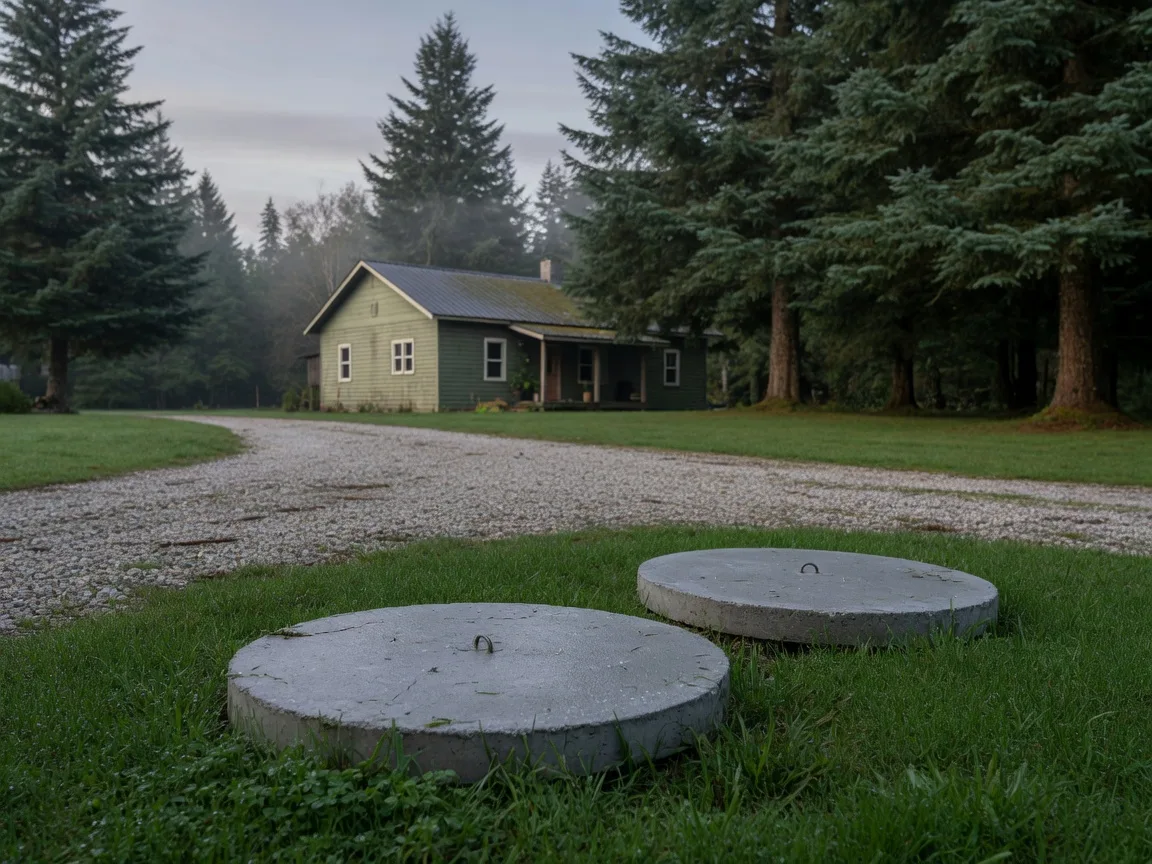
Here's what matters. There are two parts with two jobs: the tank holds the solids, and the drain field treats the liquid.
Wastewater flows from the house into the tank. Solids settle to the bottom. Scum floats on top. The liquid in the middle, called effluent, flows out to the drain field, where the soil filters it naturally.
A healthy system does this quietly, for decades. A failing one announces itself, if you know what to look for.
How Long Does a Septic System Last?
The EPA puts the average lifespan of a septic system at roughly 15 to 40 years, depending on the tank material, the site conditions, and how well it was maintained.
In practice, I plan around 25 to 30 years for a conventional system, and I assume the drain field fails before the tank does.
Conventional gravity drain fields typically last 20 to 40 years. Mound systems last about 20 to 30. A concrete tank can reach 40 to 50 years or more. A steel tank often fails sooner, in the 15 to 25 year range.
Signs a Septic System Is Failing
Walk the yard the way an inspector would, before you make an offer.
- Sewage backing up into toilets, tubs, or sinks
- Drains that run slow all over the house, not just one fixture
- Gurgling sounds in the plumbing
- Standing water, damp spots, or soggy ground over the tank or drain field
- Sewage odors indoors or around the yard
- Grass over the drain field that is unusually lush and bright green
- Elevated nitrates in the well water, if the property has a well
What a Real Inspection Actually Covers
Oregon does not legally require a septic inspection when a home is sold. But the standard Oregon residential sale agreement, with its Septic Addendum, makes an evaluation the normal expectation, and most lenders require one anyway.
When it happens, Oregon law requires the evaluation to be done by a qualified professional: a professional engineer, a registered environmental health specialist, a DEQ-certified installer or maintenance provider, or a NAWT-certified inspector. The findings are reported on DEQ's official Existing System Evaluation Report.
A full inspection goes far beyond pumping the tank. Here is what the inspector is actually checking:
- 1
Tank level. Recorded before anything is pumped. A liquid level sitting above the outlet pipe means the drain field is not accepting effluent, which is the classic sign of field failure.
- 2
Baffles and tank walls. The inlet and outlet baffles keep scum from reaching the drain field. The inspector checks them, along with the walls, any cracks, and the risers.
- 3
Sludge and scum depths. Measured after pumping. Excess solids mean the tank was neglected, and a neglected tank is hard on the drain field.
- 4
The drain field itself. A surface walk for soggy ground, surfacing effluent, and overly lush grass. The inspector probes the soil for saturation and opens the distribution box to confirm even flow to the lines.
- 5
The dye test. A non-toxic dye is flushed through the plumbing. The inspector watches the yard and nearby water for dye surfacing, which reveals a leaking line or a failing field.
What It Costs to Keep a System Healthy
DEQ's guidance is to pump a standard household system every three to five years. That rhythm is the cheapest insurance you will ever buy on a rural property.
In Oregon, pumping a typical 1,000 to 1,500 gallon residential tank runs roughly $300 to $550. A full inspection with a dye test typically costs about $350 to $550, and many companies bundle the pump with the inspection.
Compare that with the alternative. A full system replacement in Oregon typically runs about $5,100 to $15,400, and difficult sites cost more. The maintenance is the cheap part.
Questions to Ask Before You Make an Offer
Here's what matters. Get the records, then get an inspection, and make both part of your offer.
- How old is the system, and is there a permit on file with the county?
- When was it last pumped and inspected? Can the seller show records?
- What type of system is it: conventional gravity, mound, or an alternative system?
- Is it sized for the number of bedrooms in the home?
- Is there room on the property for a replacement drain field if this one fails?
- Are you planning an ADU or an addition? Oregon updated its onsite rules effective January 1, 2026, with provisions for connecting accessory dwelling units to existing systems, but the county still needs to approve the details.
Free Acreage Buyer Checklist
The checklist I walk every acreage buyer through covers septic, wells, zoning, and easements. Download it before you tour, not after you fall for the view.
Your Next Step
Most of the buyers I work with in Linn and Douglas County have never owned acreage before. That is exactly why I am here.
Bring me the listing. I will tell you what the photos do not show, including what that bright green patch of yard is trying to tell you.
Book a free 30-minute call and we will walk through the system, the records, and what the property really needs before you commit.